
Pine Straw or Mulch for Florence Fall Beds?
For most Florence properties, the better fall bed covering is the one that fits the slope, plants, drainage, edges, and level of upkeep you want. Pine straw settles into broad Southern planting beds and tends to stay put on gentle slopes. Shredded hardwood mulch creates a darker, more defined surface and works well where crisp bed lines are part of the design. Neither material fixes weeds, poor drainage, buried plant crowns, or neglected edging on its own.
September is a useful time to compare the two because summer has already shown where beds dry quickly, wash during storms, or collect leaves and runoff. Use those clues before scheduling a refresh through Modern Day Landscaping’s lawn maintenance services.
Key Takeaways
- Choose for the bed you have, not by color alone.
- Correct weeds, drainage trouble, and excessive old material before adding a fresh layer.
- Keep either material away from trunks, stems, siding, and drainage openings.
- Judge refresh timing by depth and condition instead of a fixed calendar date.
Start with the job the covering must do
Pine straw and hardwood mulch share several jobs. They shade the soil surface, reduce rapid moisture loss, soften rain impact, and give beds a finished appearance. Clemson’s South Carolina garden guidance lists pine straw, hardwood, and pine bark as useful mulch materials and advises keeping mulch away from stems and trunks. That common ground matters: installation quality can be more important than the label on the material.
The choice becomes clearer once you name the main need. A large natural bed beneath pines has different demands than a compact front entry bordered by concrete. A sloped bed beside a driveway behaves differently than a level foundation bed beneath a roof valley. Walk the property after rain, inspect how the current material has moved, and note where soil is exposed.
When pine straw is the practical choice
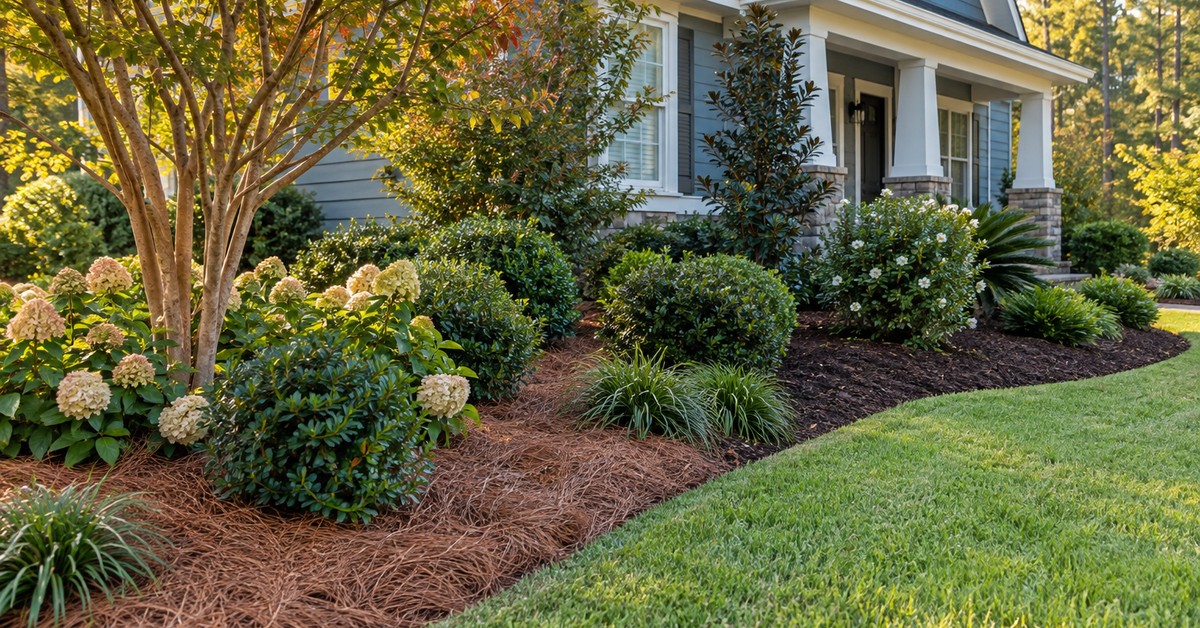
Pine straw has a light, textured look that feels at home around azaleas, camellias, ornamental grasses, and mature Southern trees. The needles knit together as they settle. That structure can help the material remain on a slope where chunky products roll or float, although concentrated runoff can move any loose covering.
Broad beds and curved edges
Long needles spread easily through sweeping beds and around established shrubs. They also make it simple to feather the covering toward an irregular edge without forcing a rigid line. On a large property, this can create a consistent surface without making every bed feel formal.
Frequent light touchups
Pine straw compresses and fades as it weathers. Homeowners who prefer a fresh copper-brown appearance may choose lighter, more frequent touchups rather than waiting for a major reset. Before adding more, loosen matted areas and confirm that repeated applications have not built excessive depth around plant bases.
Conditions that need a second look
Pine straw can bridge over low weeds, hide poor bed preparation, and collect against siding or tree trunks if it is blown or raked carelessly. It may also look untidy where foot traffic crosses a bed. If runoff cuts channels through the surface, address the water source rather than replacing the displaced straw again and again.
When shredded hardwood mulch fits better
Shredded hardwood mulch creates stronger contrast against green foliage and light-colored homes. Its dense surface helps a small front bed read as one deliberate shape. It is often the better visual fit around formal foundation plantings, straight walks, and patios where the edge matters as much as the planting.
Defined entries and high-visibility beds
A dark mulch can make bed lines and seasonal color stand out. That does not mean deeper is better. If the existing layer is still substantial, adding enough material to change the color can leave the bed too thick. Rake through the old layer, check soil level around crowns, and remove compacted buildup where needed.
Areas where material movement shows quickly
Shredded mulch tends to lock together better than large nuggets, but roof discharge and fast surface runoff can still push it onto turf or pavement. Splash marks, bare channels, and mulch piled at the downhill edge point to a drainage or grading problem. Modern Day Landscaping’s landscape design and installation work can address the bed as part of a larger site plan when the problem reaches beyond surface material.
Maintenance expectations
Hardwood mulch breaks down and mixes with the material below it. That can be useful in a managed bed, but it also means color and texture change over time. Dyed color alone should not decide the schedule. Inspect whether the bed still has useful coverage, whether weeds are breaking through, and whether the soil surface has risen too close to siding or plant crowns.
Use a five-point Florence bed check
1. Look at slope and runoff
Check beds after a steady rain or irrigation cycle. Find roof valleys, downspout outlets, low spots, and narrow channels between shrubs. A covering can slow splash and erosion, but it cannot redirect a concentrated stream safely. If water is crossing the bed toward the home or washing soil away, solve that first.
2. Check plant bases
Pull material back far enough to see the main stems and root flare of woody plants. Soil and mulch piled against bark keep the area damp and make inspection difficult. Reset the grade if repeated applications have created a mound around shrubs or trees.
3. Measure what remains
Do not estimate depth from the fresh-looking surface. Part the layer in several places, including under shrub canopies and along the downhill edge. Some sections may need a light touchup while others need old material removed or redistributed. A uniform delivery does not require a uniform amount everywhere.
4. Deal with weeds before covering them
Fresh pine straw or mulch can hide weeds for a short time, but established roots and seedheads remain. Remove or treat weeds appropriately before the refresh, then repair the edge so turf does not creep back into the bed. The fall yard cleanup plan explains why bed work should be coordinated with leaves, mowing, and other seasonal tasks.
5. Match the finish to the property
Stand at the street, front door, and main outdoor seating area. Pine straw often suits larger wooded lots and layered plantings. Dark mulch can sharpen compact beds and formal entries. Photos in the Knowledge Center and the Florence service area provide context for services offered locally, but your own sightlines should drive the final choice.
Do not mix materials without a reason
Using pine straw in one bed and hardwood mulch in another can work when the property has distinct zones. For example, a formal front entry may use dark mulch while a natural rear border uses pine straw. Random switching from bed to bed usually makes the yard feel patched together. Repeat the same material within connected views, and use pavement, a wall, or a change in planting style as the transition.
If you change an established bed from pine straw to mulch, remove loose excess and confirm the final grade rather than burying one material beneath a thick new layer. The same applies in reverse. A clean transition begins with preparation, not concealment.
Questions homeowners ask
Is pine straw or mulch better for Florence, SC?
Neither is universally better. Pine straw often suits broad natural beds and slopes, while shredded hardwood mulch gives a denser, more defined finish. Plant needs, drainage, edges, and upkeep should decide.
Can new pine straw go over old pine straw?
A thin, loose existing layer may remain, but matted material, weeds, debris, and excess depth should be corrected first so the refreshed bed does not trap moisture against stems.
How often should landscape beds be refreshed?
Refresh timing depends on decomposition, runoff, traffic, and the appearance you want. Inspect depth and condition instead of following a date alone.
Should mulch touch shrub trunks?
No. Keep pine straw and mulch pulled back from trunks and main stems so moisture is not held directly against plant tissue.
Choose the material after the bed is ready
A good fall refresh should leave Florence beds cleaner, easier to inspect, and better matched to the property. It should not bury a drainage issue or turn plant bases into deep mounds. Modern Day Landscaping can assess the beds, prepare the surface, and install the chosen material as part of a coordinated maintenance visit. To discuss pine straw or mulch for your property, request service online or call (843) 213-6654.


