Sod Installation in Florence: What September Changes
A new lawn can look finished the day sod goes down, but that visual change is only the beginning. The real test is whether roots can move into the prepared soil before seasonal conditions slow warm-season turf. For Florence homeowners considering sod installation in September, the right question is not simply, “Can sod be laid this month?” It is, “Is this yard ready to support establishment now?”
September is a decision point. Sun exposure, drainage, soil condition, irrigation coverage, turf selection, installation quality, and your ability to manage early care all matter more than a date by itself. This go/no-go diagnostic helps you identify a yard that is ready, a yard that needs corrections first, and a project that may be wiser to postpone.
September Is a Decision Point, Not a Deadline
Florence lawns commonly use warm-season grasses. Those grasses establish most actively while soil and air conditions still support growth, and they need time to anchor before cold weather and dormancy reduce that activity. September does not create an automatic yes or no. An earlier project on a poorly prepared site can fail, while a carefully assessed project may have a workable path if conditions, turf type, watering, and follow-through align.
The shorter seasonal runway makes unresolved problems more important. A dry irrigation zone, compacted base, shaded corner, or low spot that holds water will not improve because fresh sod covers it. If the site needs substantial correction, it is often better to complete that work deliberately than to rush turf onto an unready surface. Modern Day Landscaping’s landscape design and installation services include sod installation along with related site improvements.
The Seven-Part Go/No-Go Diagnostic
1. Does the site receive enough useful sunlight?
Start by mapping sun across the future lawn, not by judging the yard at one moment. Note areas with strong direct sun, filtered light, and prolonged shade from buildings or tree canopy. Turf species differ in shade tolerance, but no grass is a universal fix for a deeply shaded, root-competitive site. If a large section receives too little light, mark that area as a no-go until the planting plan changes. A bed, groundcover, or other landscape treatment may be more realistic than forcing turf where it will remain thin.
2. Does water leave the site predictably?
Check the property after rainfall or a complete irrigation cycle. Sod needs moisture during establishment, but it also needs oxygen around developing roots. Persistent puddles, runoff toward the house, washed soil, and soft depressions are warning signs. Correcting the source before installation protects the new surface from settling, erosion, and saturated zones. The existing guide to drainage and grading warning signs in Florence can help you separate a minor surface issue from a larger grading concern.
3. Is the soil prepared below the visible surface?
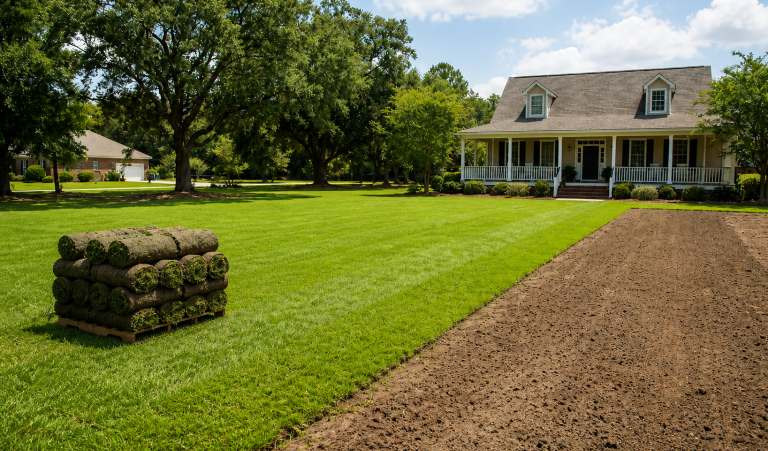
A smooth top layer can hide compaction, construction debris, unsuitable grade, or an abrupt soil change. A real readiness check includes removing unwanted vegetation and debris, loosening compacted soil where appropriate, shaping the final grade, and using soil-test guidance rather than guessing at amendments. Fresh sod should meet a firm, even, moist soil surface without bridging over hollows. If footprints sink deeply or the surface is hard enough to resist normal root movement, the base is not ready.
4. Can irrigation reach every piece evenly?
Run the system before sod arrives. Watch each zone long enough to find blocked heads, overspray, weak pressure, missed corners, and water running off slopes. New sod has a limited root system, so a dry strip can decline quickly. At the same time, a low area that receives overlapping spray can stay too wet. The goal is even moisture at the sod and soil interface, adjusted for rainfall and actual site conditions. If coverage is uncertain, schedule irrigation design, maintenance, or repair before installation day.
5. Does the turf choice fit the yard and the remaining season?
Choose turf for the site you have, not only for color or texture. Sun, drainage, soil, expected traffic, maintenance expectations, and cold sensitivity all influence the decision. September adds another factor: the chosen warm-season turf needs an honest establishment window. A professional recommendation should account for current conditions and the specific variety rather than promising that every grass performs the same way. Long-term care also matters, so review the available lawn care services when planning beyond the installation itself.
6. Will the sod have complete seam and root contact?
The installation surface should allow each piece to sit flat, with edges fitted closely and joints staggered. Stretched pieces can pull back and expose gaps. High spots and hollows leave roots suspended away from moist soil, even when the lawn looks level from the patio. Consistent contact across the entire area helps moisture move between the soil and sod and gives roots a better opportunity to anchor. Slopes also need an installation approach that limits shifting and erosion.
7. Can the household protect the lawn through early care?
Sod installation is not complete when the last piece is placed. The household needs a clear watering plan, a way to verify moisture in different zones, and the discipline to keep unnecessary foot and pet traffic off the turf while it anchors. Watering frequency should respond to weather, soil, slope, and rooting progress rather than a fixed number copied from another property. Mowing should wait until the sod is anchored and should follow the correct height for the turf type with a sharp blade.
Compact September Readiness Checklist
Answer each item before reserving sod or committing to an installation date:
- Sun: We know which areas receive direct sun, partial shade, and prolonged shade.
- Drainage: Rain and irrigation do not leave persistent puddles, erosion paths, or runoff toward structures.
- Soil: Existing vegetation, debris, compaction, grade, and soil-test needs have been addressed.
- Irrigation: Every zone has been tested, and dry spots, overlaps, and runoff are corrected.
- Turf fit: The selected grass matches the site and has a realistic establishment window.
- Installation: The plan includes tight seams, staggered joints, an even surface, and full root contact.
- Early care: Someone can monitor moisture, limit traffic, and adjust care as rooting progresses.
One unanswered item does not always end the project, but it does become a condition that must be resolved. Several unanswered items usually point to a rushed installation with avoidable risk.
Choose a Verdict: Go, Conditional Go, or Wait
Go
The site fits the turf, drainage and soil preparation are complete, irrigation coverage is verified, the sod can be installed promptly, and the household can manage early care. Even with a go verdict, establishment still depends on real weather and site response. Monitor the lawn instead of treating the schedule as automatic.
Conditional go
The project may move forward after a defined correction, such as repairing an irrigation zone, refining the grade, resolving a shaded strip, or confirming turf selection. Put that condition in writing and complete it before delivery. A conditional go should never mean installing first and hoping the issue disappears later.
Wait
Delay when the site has unresolved drainage, insufficient light for the proposed turf, major compaction or grading work, unreliable irrigation, or too little capacity for aftercare. Waiting is also reasonable when the selected warm-season grass lacks a suitable establishment window under current conditions. Use the delay to solve the cause of the old lawn’s decline, not merely to pick another date.
This diagnostic is especially useful on properties where a former lawn failed. A new layer of sod cannot correct the reason the previous turf thinned out. Photographs of finished local work in the Modern Day Landscaping project gallery can help you discuss the appearance you want, while the Florence service area overview provides local service context.
Make the Readiness Call Before Delivery Day
The best September sod decision is made before pallets arrive. A site that passes the seven checks has a much stronger foundation than one approved by calendar alone. A site that does not pass has given you useful information early enough to correct the plan.
For a site-specific sod installation assessment in Florence, call Modern Day Landscaping at (843) 213-6654 or use the online contact form to discuss your yard, irrigation, turf options, and timing.
Frequently Asked Questions
Can warm-season sod be installed in Florence in September?
It may be possible, but the month alone does not determine success. Turf type, active growing conditions, soil preparation, irrigation, and the time available for rooting all need to be assessed before proceeding.
Should drainage be fixed before sod installation?
Yes, when water collects, erodes the surface, or moves in the wrong direction. Sod can cover a drainage symptom temporarily, but it does not correct the grade or runoff source underneath.
How do I know whether new sod is rooting?
Follow the installer’s care instructions and check progress gently at a few representative edges. Increasing resistance to a light lift suggests roots are anchoring. Avoid repeatedly pulling or walking across the lawn.
How much should new sod be watered in September?
There is no universal minute setting. The correct plan depends on turf type, soil, slope, irrigation output, rainfall, and rooting stage. Keep the sod and upper soil appropriately moist without creating runoff or persistent saturation, then adjust as roots develop.