
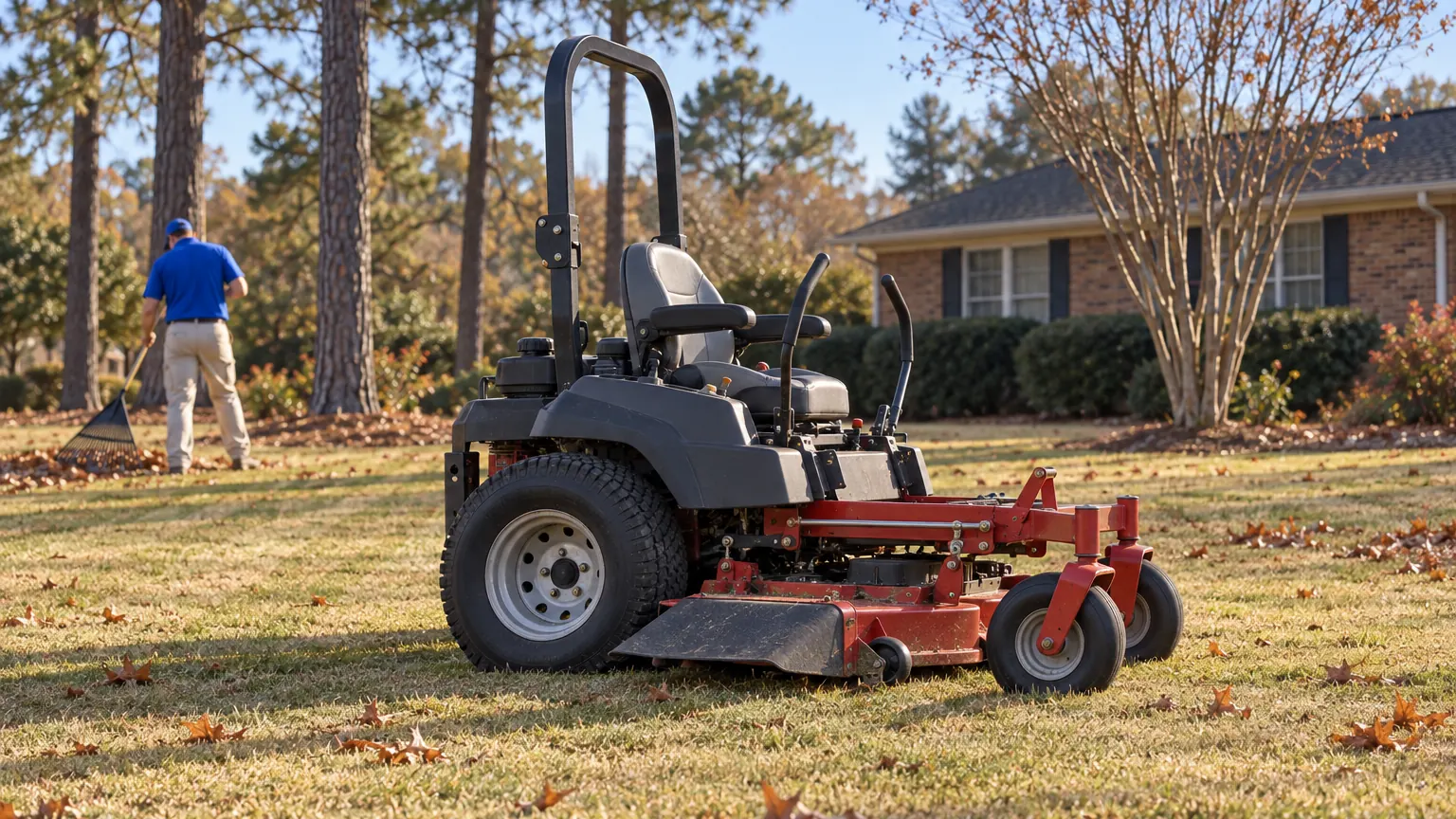
When to Stop Mowing Your Lawn in South Carolina
Most warm-season lawns in the Pee Dee stop needing mowing sometime between mid-November and early December, usually after the first hard frost. There is no fixed date. Stop when the grass quits growing and turns tan, not when the calendar says so, and keep mowing as long as it is actually growing.
What month do you stop mowing a lawn in South Carolina?
For bermudagrass, centipedegrass, zoysia, and St. Augustine, the last mow usually falls somewhere from mid-November into early December, depending on how the fall plays out. Warm-season grass grows in response to soil temperature, not the date. Once nights turn consistently cool and the first frost hits, growth drops off fast.
That means the last mow changes from year to year. A warm October can keep a lawn growing well into November. An early cold snap can shut things down in the first week of the month. In the Pee Dee, mowing frequency usually drops from weekly to every two or three weeks in early November, then to nothing.
How do you know your warm-season grass has stopped growing?
Look at the lawn rather than the weather forecast. A few signs tell you growth has stopped:
- Color change. The lawn fades from green to a straw tan or light brown, often right after a frost.
- No height gain. If you mowed ten days ago and the lawn looks the same, there is nothing to cut.
- Stiff, dry blades. Dormant grass feels brittle and does not spring back the way actively growing turf does.
- Slow recovery from foot traffic. Footprints stay visible longer because the grass is no longer pushing new growth.
Tan grass does not mean dead grass. Warm-season turf goes dormant in winter as a survival response. The crowns and roots stay alive, along with stolons and rhizomes in lawns that have them, and those living parts fuel regrowth in spring. Green-up is what tells you the lawn made it through.
What mowing height should you use for the last cuts of the year?
Mow at your normal height for the grass type through the fall, and avoid dropping the blade dramatically for the final cut. Typical home-lawn ranges are roughly one to two inches for bermudagrass, about two inches for centipedegrass, and taller for zoysia and St. Augustine, with St. Augustine often kept around three to four inches. Check the recommendation for your specific variety, since cultivars differ.
Cutting very short right before dormancy removes leaf surface that is still feeding the plant, and it exposes the crowns to cold. It also leaves bare soil where winter weeds like to germinate. If a lawn has gotten a little tall, bring it down gradually over two mows rather than all at once.
Does the 1/3 rule still apply in late fall?
Yes. The 1/3 rule says never remove more than one third of the blade height in a single mowing. If you keep a lawn at two inches, cut it before it passes three. Cutting more than that stresses the grass because it loses too much leaf at once.
In fall the rule matters for a different reason. Growth is slowing, so the lawn recovers more slowly from a hard cut. A lawn that got ahead of you in a rainy October is better brought down in two steps a week apart than scalped in one pass. And if the grass has already stopped growing, the rule is moot because there is nothing to cut.
Should you keep mowing to chop up fallen leaves?
Often yes, to a point. A light layer of leaves can be mulched with the mower. Run over them while they are dry and the pieces fall between the grass blades and break down over the winter. That keeps nutrients on the lawn and saves bagging.
The limit is thickness. If you can no longer see grass through the leaves, or the mower leaves clumps on top, the layer is too heavy to chop in place. Thick, matted leaves block light and hold moisture against dormant turf, which invites disease and smothers the crowns. In that case the leaves need to come off.
With a few mature oaks or pecans in the yard, a sensible approach is to knock back the first drop with a mowing pass, then do one full leaf removal once most of the trees have let go, rather than chasing leaves every week. Our lawn maintenance service includes lawn mowing and fall cleanups and leaf removal, if you would rather hand that work off.
Mowing wet leaves
Wet leaves are the usual problem. They clump, clog the mower deck, and leave piles on the lawn. Wait for a dry afternoon if you can. If the grass is dormant and leaves are wet and heavy, raking or blowing beats mowing.
What should you do with the lawn once mowing stops for winter?
Stopping the mower does not end the work. A few things matter before spring:
- Keep leaves and debris off. Do a final cleanup after the last trees drop. Pine cones, sticks, and leaf piles left on dormant turf cause thin spots.
- Do one last walk for weeds. Winter weeds such as annual bluegrass and henbit grow while warm-season turf sleeps. Spotting them early is easier than fighting them in March. Weed control is part of lawn care, and timing for pre-emergent products depends on the weed and the soil temperature.
- Skip late-season nitrogen. Feeding warm-season grass with nitrogen as it heads into dormancy can push tender growth that frost then burns. If you are thinking about other nutrients, let a soil test and local recommendations guide what and when.
- Ease off watering. Dormant turf needs far less water. If you have a sprinkler system, shutting down or adjusting the schedule is part of the fall checklist, and watering rules vary by city and utility, so check with yours.
- Service the mower. Sharpen the blade, change the oil, and drain or stabilize the fuel so it starts in April.
Resist the urge to scalp the lawn in December. Scalping is a late winter or early spring job for some lawns, and only once the danger of hard freezes has passed.
When does mowing start again in the Pee Dee?
Usually in April, after the lawn greens up and soil temperatures climb. Early green-up can start in late March in a warm spring. The first spring mow should wait until the grass is actually growing, not just until the weather feels warm.
If you would rather hand off the last mows, the leaf cleanup, and the spring restart, you can reach us through our contact page. We work with homeowners in Florence, Darlington, Hartsville, Bishopville, Marion, and the surrounding Pee Dee.
Frequently asked questions
Do I need to mow dormant bermudagrass or centipedegrass?
No. Once the grass has stopped growing and turned tan, there is nothing to cut. Mowing dormant turf is mostly unnecessary, and extra traffic, scalping, or mowing frost-covered grass can damage it. Wait until spring green-up and the grass is actively growing again.
Is it bad to mow wet leaves on the lawn?
It is not harmful to the grass in one pass, but it works poorly. Wet leaves clump, clog the deck, and leave mats that smother turf. Wait for a dry day, or rake or blow heavy layers instead.
Should I bag clippings in the fall?
Usually not, unless the grass is very long or the clippings are clumping. Short clippings break down quickly and return nutrients. Bag when you have heavy leaves mixed in or notice clumps lying on top of the lawn.
When does mowing start again in spring in the Pee Dee?
Most Pee Dee lawns need their first mow in April, once soil warms and the grass greens up. A warm spring can bring it earlier, and a cool one later. Start when you see actual growth, not on a set date.
Can I scalp the lawn before winter?
It is better not to. Scalping in late fall removes protective leaf growth and leaves bare soil exposed to cold and winter weeds. If a lawn needs a low spring cut, do it after the hard freezes are behind you and before green-up.